4 min read
VPNs, proxy servers, and the Tor network all serve a similar basic purpose: they put something between you and the websites you visit, hiding your real IP address. But that's where the similarities end. Each tool works differently, protects different things, and has very different trade-offs in speed, security, and usability.
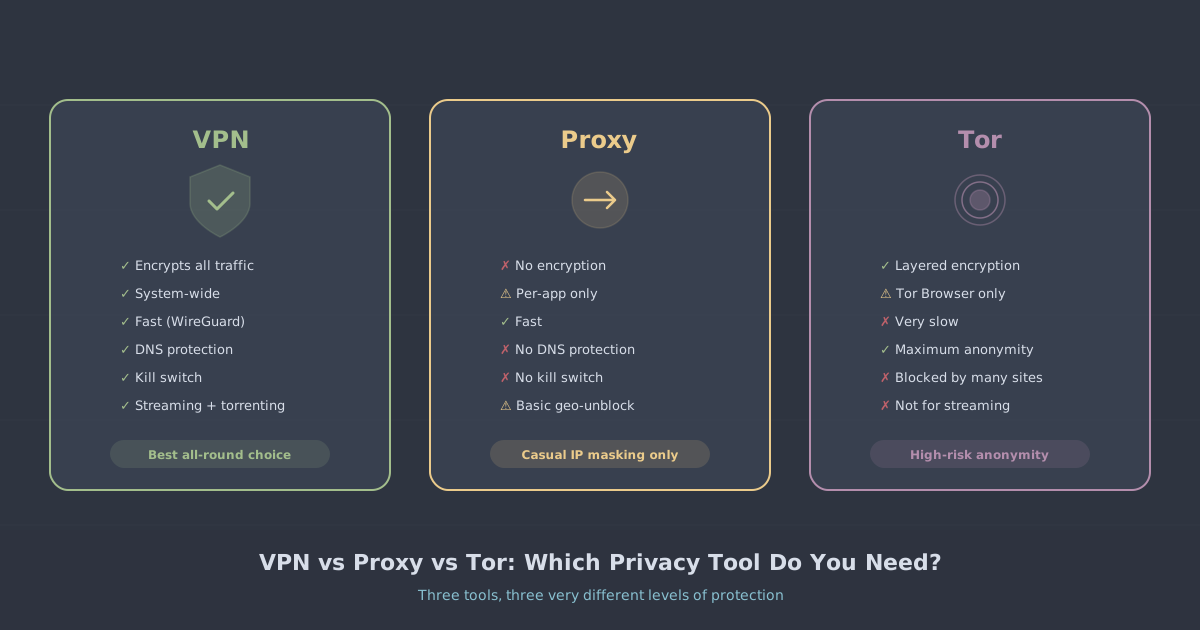
Quick Comparison
| Feature | VPN | Proxy | Tor |
|---|---|---|---|
| Encrypts all traffic | ✅ Yes (system-wide) | ❌ No (app-level only) | ✅ Yes (within Tor) |
| Hides IP from websites | ✅ Yes | ✅ Yes | ✅ Yes |
| Speed | ⚡ Fast | ⚡ Fast | 🐌 Very slow |
| Encryption strength | Strong (AES-256/ChaCha20) | None or weak | Strong (layered) |
| Anonymity level | Medium | Low | Very high |
| Works with all apps | ✅ Yes | ❌ Per-app only | ❌ Tor Browser mainly |
| Protects on public Wi-Fi | ✅ Yes | ❌ No | ✅ Yes |
| Easy to set up | ✅ Very easy | ⚠️ Per-app config | ⚠️ Requires Tor Browser |
| Suitable for streaming | ✅ Yes | ⚠️ Some | ❌ Too slow |
| Suitable for torrenting | ✅ Yes | ❌ No encryption | ❌ Not designed for it |
How a VPN Works
A VPN creates an encrypted tunnel between your device and a VPN server. All of your internet traffic — every app, every connection, every DNS request — is routed through this tunnel. The VPN server then forwards your traffic to the destination, using its own IP address instead of yours.
Key characteristics:
- System-wide protection — every application on your device is covered automatically
- Strong encryption — modern VPNs use AES-256 or ChaCha20, the same encryption used by governments and banks
- DNS protection — your DNS queries are also encrypted and routed through the VPN
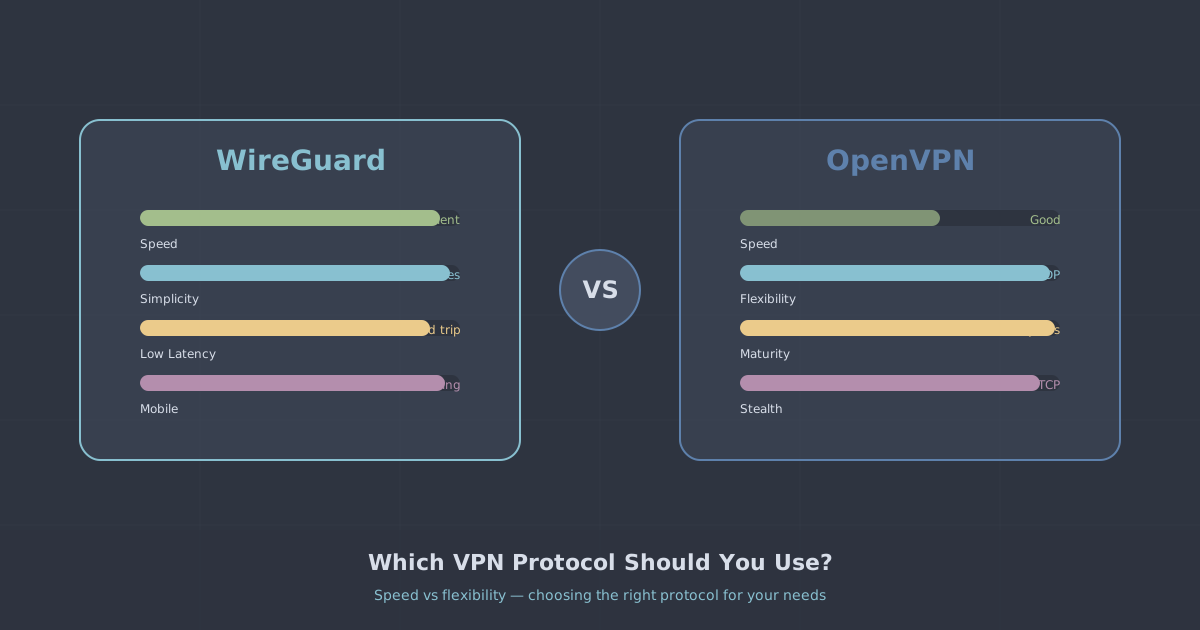
- Fast — modern protocols like WireGuard add minimal overhead
The main limitation is that you're trusting the VPN provider. They can see your traffic (though reputable providers don't log it), and your anonymity depends on their no-log policy being genuine.
How a Proxy Works
A proxy server is a simple relay. You configure a specific application (usually your web browser) to send its requests through the proxy server instead of directly to the destination. The proxy forwards the request using its own IP address.
Key characteristics:
- App-level only — you have to configure each application individually. Other apps bypass the proxy entirely
- No encryption (usually) — most proxies (HTTP, SOCKS4) don't encrypt your traffic at all. SOCKS5 proxies with authentication offer minimal protection, and HTTPS proxies only encrypt the connection to the proxy, not beyond
- Fast — low overhead since there's minimal or no encryption
- Easy to detect and block — proxy traffic patterns are well-known
Proxies are useful for simple IP masking — accessing geo-restricted content from a web browser, for example — but they provide no meaningful security. Your ISP can still see what you're doing, and anyone on the same network (like public Wi-Fi) can intercept your traffic.
How Tor Works
Tor (The Onion Router) routes your traffic through a chain of three volunteer-operated relays, each of which only knows the identity of the relay before and after it — never the full path. Your traffic is encrypted in layers (like an onion), with each relay peeling off one layer.
Key characteristics:
- Maximum anonymity — no single relay knows both who you are and what you're accessing
- Decentralised — run by thousands of volunteers worldwide, with no single point of control
- Very slow — traffic passes through three relays in different countries, adding significant latency
- Limited to Tor Browser — while you can "torify" other apps, it's complex and error-prone
- Blocked by many websites — Tor exit nodes are well-known and frequently blocked
Tor is designed for situations where anonymity is critical — journalists communicating with sources, activists in authoritarian countries, or researchers accessing sensitive information. It is not designed for everyday browsing, streaming, or downloading.
Which Should You Use?
Use a VPN if you want:
- Privacy from your ISP and network operators
- Security on public Wi-Fi
- Access to geo-restricted content (streaming, websites)
- Fast, encrypted connections for all your apps
- Protection while torrenting
- A simple, install-and-forget solution
Use a Proxy if you want:
- Quick IP masking for a single browser session
- To bypass simple geo-blocks without encryption
- The absolute fastest possible connection (no encryption overhead)
Use Tor if you want:
- Maximum anonymity where speed doesn't matter
- To access .onion sites
- To communicate without any party being able to trace you
- Protection in high-risk situations (journalism, activism)
Can You Combine Them?
Yes. Some users run Tor over a VPN — connecting to a VPN first, then opening Tor Browser. This prevents your ISP from seeing that you're using Tor (which can itself be suspicious in some countries), while Tor's layered routing prevents the VPN provider from seeing what you're accessing.
Running a VPN with a SOCKS5 proxy is also common for torrenting: the VPN encrypts your traffic, while the proxy provides an additional layer of IP masking for your torrent client specifically.
Our Recommendation
For the vast majority of users, a VPN is the right choice. It provides the best balance of security, speed, and usability. It protects all your traffic automatically, works with every app, and modern protocols like WireGuard ensure minimal speed impact.
Proxies are fine for casual, non-sensitive use but should never be relied on for privacy. Tor is a specialised tool for high-risk scenarios where anonymity is more important than speed.
PremierVPN encrypts all your traffic with WireGuard or OpenVPN, protects your DNS queries, and provides a kill switch to prevent leaks. It's the simplest, most effective way to protect your privacy online.