8 min read
Most people think of VPNs as something for tech enthusiasts or people with something to hide. The reality is very different. There are everyday situations where not using a VPN leaves you genuinely vulnerable.
1. Using Public Wi-Fi
Coffee shops, airports, hotels, trains — any public Wi-Fi network is a hunting ground for attackers. Without a VPN, anyone on the same network can potentially intercept your traffic. This isn't theoretical; it's trivially easy with freely available tools.
2. Online Banking
Yes, your bank uses HTTPS. But a VPN adds an extra layer of encryption and prevents your ISP from knowing when you access your bank, how often, and for how long. On public networks, it's absolutely essential.
3. Shopping Online
When you enter card details on shopping sites, a VPN ensures that traffic is encrypted from your device to the VPN server — not just to the website. It also prevents price discrimination based on your location.
4. Searching for Sensitive Topics
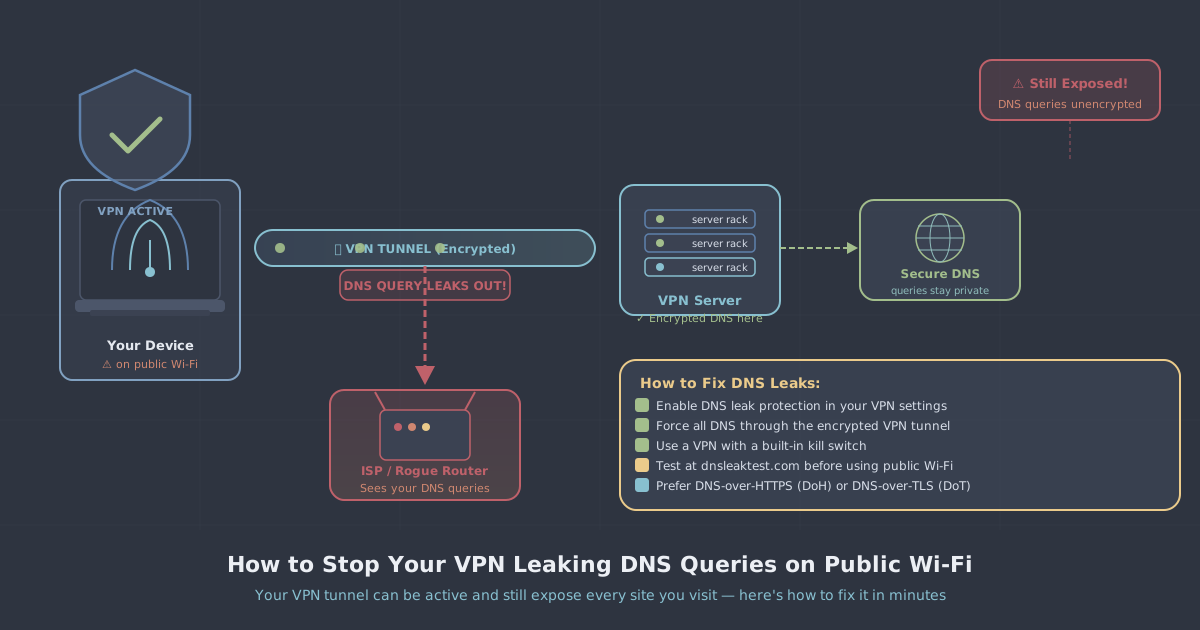
Health conditions, legal questions, financial problems — your search history paints an intimate portrait of your life. Your ISP logs every DNS query. A VPN keeps those searches between you and the search engine.
5. Torrenting
Whether you're downloading Linux ISOs or creative commons media, torrent traffic exposes your IP address to every peer in the swarm. Your ISP can see you're torrenting and may throttle your connection or send warning letters.
6. Accessing Your Company's Network Remotely
Working from a café or co-working space? Without a VPN, sensitive company data traverses whatever network you're connected to. Many companies require VPN use for exactly this reason.
7. Travelling Abroad
Different countries have different internet laws and surveillance practices. A VPN ensures your browsing experience remains private regardless of where you are physically.
8. Checking Email
Email protocols aren't always fully encrypted, and email metadata (who you're emailing, when, how often) is valuable surveillance data. A VPN hides all of this from your network provider.
9. Using Smart Home Devices
IoT devices are notoriously insecure. Running your home network through a VPN-enabled router protects all your smart devices — thermostats, cameras, speakers — from external snooping.
10. Simply Browsing the Web
Under the UK's Investigatory Powers Act, your ISP must store your browsing history for 12 months. Every website you visit, every service you use — logged and available to government agencies. A VPN is the simplest way to opt out of mass surveillance.
The Bottom Line
A VPN isn't just for hiding. It's for protecting your data in transit, preventing profiling by your ISP and advertisers, and maintaining basic digital privacy in an age where it's not granted by default.