9 min read
Something changed quietly in 2025. Across the UK, United States, and European Union, governments began passing laws that require you to verify your age — with real personal identification — just to access parts of the internet. The reaction was immediate: millions of people signed up for VPNs.
Whether you support the intent behind these laws or not, the privacy implications are significant. This article breaks down what's happening, why it matters, and what you can do to protect yourself.
What Are Age Verification Laws?
Age verification laws require websites — typically those hosting adult content, social media, or other age-restricted material — to confirm that visitors are over 18 before granting access. In theory, this sounds straightforward. In practice, it means websites are being asked to collect government-issued ID, facial scans, or other biometric data from visitors.
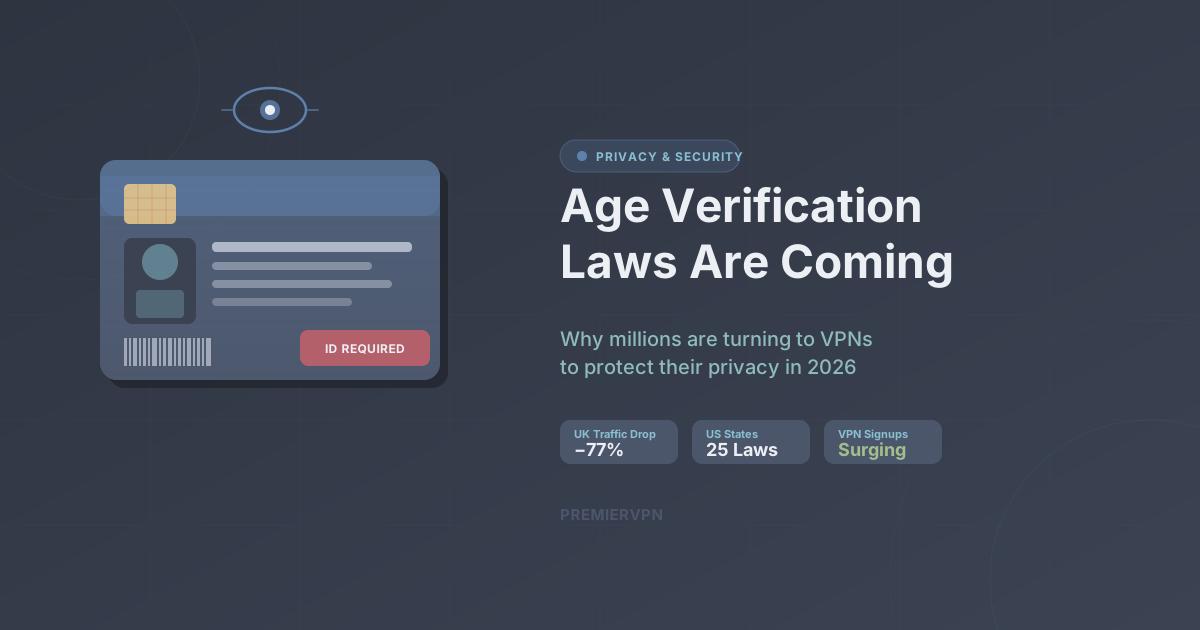
The UK's Online Safety Act was one of the first major pieces of legislation to mandate this at scale. When it came into force, adult website traffic from the UK dropped by a reported 77% — but VPN sign-ups surged correspondingly, as users found a way to access content without handing over personal documents to commercial websites.
The US has followed suit. As of early 2026, 25 states have passed comprehensive age verification laws, including Michigan, Missouri, and Arizona. The EU is also advancing similar legislation, with age verification requirements expected to be tied to its broader Digital Services Act enforcement in 2026.
Why People Are Concerned
The objection isn't about the stated goal — protecting children online is something most people support. The concern is with the mechanism. When a website collects a scan of your passport or driving licence, a number of serious questions arise:
- Who stores that data? Many of the verification services involved are third-party companies with their own data retention policies.
- What happens if they're breached? Biometric and identity data is among the most sensitive information that can be leaked — it can't be changed like a password.
- Is this the beginning of wider identity checks? Critics of the laws argue they normalise mass identity verification online, paving the way for more intrusive surveillance infrastructure in the future.
- Are VPNs next? During debates in the UK Parliament on the Online Safety Act, MPs specifically raised whether VPNs should also require age verification — and the government said "the VPN issue" would be investigated.
The Wider Surveillance Picture
Age verification is part of a broader trend. ISPs in multiple countries are already required to log browsing activity. Data brokers routinely aggregate and sell behavioural profiles. The combination of identity-linked browsing — which age verification could create — with existing tracking infrastructure is what privacy advocates find most alarming.
A VPN doesn't solve every privacy problem. It doesn't stop trackers embedded in websites, and it doesn't prevent platforms from profiling logged-in users. But it does provide a meaningful layer of protection: it masks your IP address, encrypts your traffic from your ISP, and makes it significantly harder to tie your browsing activity to your identity.
How WireGuard Stealth Helps
Standard VPN connections are increasingly detectable. Some ISPs and networks use deep packet inspection (DPI) to identify and throttle or block VPN traffic. This is especially relevant as governments look at ways to enforce compliance with age verification laws — blocking the tools people use to circumvent them is an obvious next step.
PremierVPN's WireGuard Stealth protocol addresses this directly. It disguises VPN traffic so it looks like ordinary HTTPS browsing — the kind of traffic that networks can't block without breaking the internet entirely. It's available across all PremierVPN apps on Windows, macOS, iOS, and Android, and it requires no technical setup to enable.
What Should You Do?
The honest answer is: stay informed and take sensible precautions now, before the landscape changes further.
- Use a reputable VPN with a proven no-logs policy and encrypted connections.
- Enable WireGuard Stealth if you're on a network that restricts VPN traffic.
- Avoid handing over biometric data to third-party age verification services where possible.
- Follow privacy advocacy organisations in your country — they're fighting these battles in court and in parliament.
The internet you access today looks significantly different from the one that existed five years ago. The decisions governments make in 2026 will shape what it looks like for the next decade. A VPN isn't a silver bullet, but it remains one of the most practical tools available to ordinary people who want to retain some control over their digital life.
Protect Your Privacy with PremierVPN
WireGuard Stealth, a strict no-logs policy, and servers across 25+ countries. New to PremierVPN? Check out our current offer.
View Current Offer →