9 min read
The promise of a free VPN is tempting: get all the privacy and security of a VPN without paying anything. But here's the uncomfortable truth — running a VPN service costs real money. Servers, bandwidth, development, and support all have to be paid for somehow. If you're not paying with money, you're paying with something else.
How Free VPNs Make Money
Free VPN providers need revenue to operate. Here's how most of them actually make money:
1. Selling Your Data
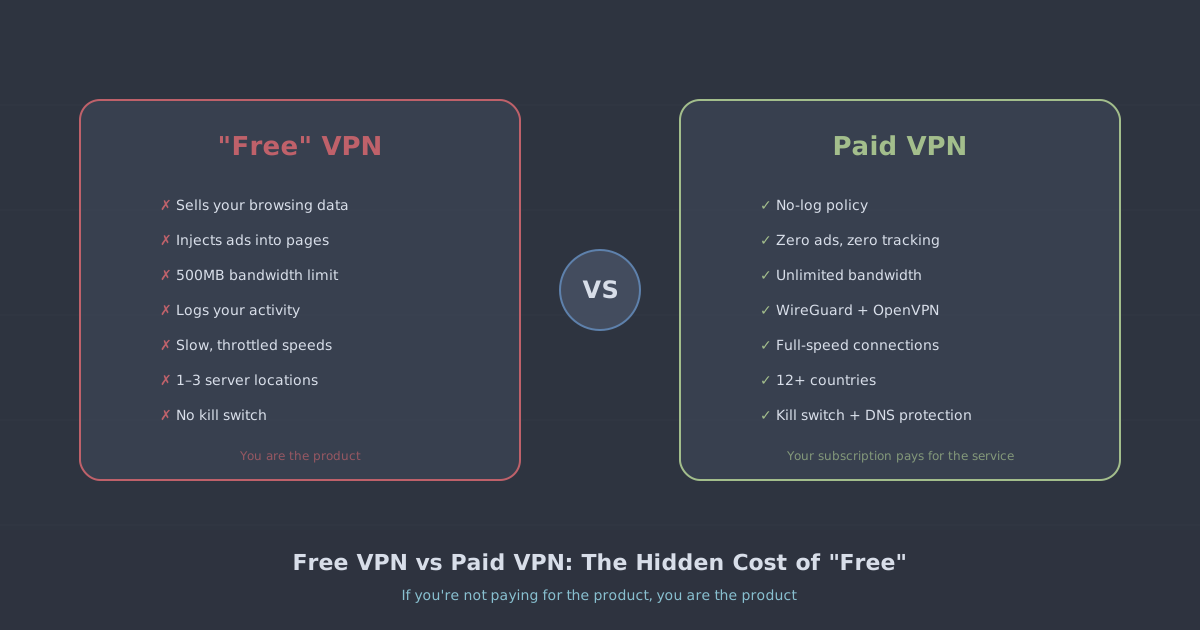
The most common monetisation strategy for free VPNs is collecting and selling user data — the exact opposite of what a VPN should do. This includes your browsing history, connection timestamps, bandwidth usage, and sometimes even the content of unencrypted traffic.
This data is sold to advertising networks, data brokers, and analytics companies. Several major free VPN apps have been caught doing this, including some with millions of downloads on app stores.
2. Injecting Ads and Tracking
Some free VPNs inject advertisements directly into web pages you visit — including pages served over HTTPS. They do this by performing a man-in-the-middle attack on your traffic (which they can do because you've routed all your traffic through their servers).
Others inject tracking cookies or modify your search results to include affiliate links, earning commission on purchases you make.
3. Selling Your Bandwidth
At least one major free VPN service was caught selling users' idle bandwidth as part of a botnet-for-hire service. Your device was being used as an exit node for other people's traffic — meaning illegal activity could be traced back to your IP address.
4. Malware and Cryptomining
Research has found that a significant percentage of free VPN apps on the Google Play Store contained malware, including trojans, spyware, and cryptocurrency miners that run in the background using your device's resources.
Technical Limitations of Free VPNs
Even free VPNs that aren't actively malicious typically have severe technical limitations:
- Bandwidth caps — most limit you to 500MB–2GB per month, which is barely enough for an hour of streaming
- Speed throttling — free tiers are deliberately slowed to push you toward paid plans
- Limited server locations — often only 1–3 countries, all heavily congested
- No protocol choice — stuck with whatever protocol they provide, often outdated
- No kill switch — if the VPN drops, your traffic leaks with no warning
- Connection limits — usually 1 device only
- Queued connections — some free VPNs make you wait in a queue before connecting
What a Paid VPN Actually Provides
A reputable paid VPN service like PremierVPN provides a fundamentally different product:
- No logging — we don't record your browsing activity, connection timestamps, or traffic content
- Unlimited bandwidth — no caps, no throttling, full-speed connections
- Modern protocols — WireGuard, OpenVPN, OpenConnect, and IKEv2
- Multiple devices — 5–10 simultaneous connections depending on your plan
- Global server network — servers in 12+ countries
- Kill switch and leak protection — built into our apps
- No ads, no tracking, no data selling — your subscription pays for the service
The Real Cost of "Free"
| Feature | Free VPN | Paid VPN (PremierVPN) |
|---|---|---|
| Logs your activity | ⚠️ Usually yes | ❌ No-log policy |
| Sells your data | ⚠️ Common | ❌ Never |
| Injects ads | ⚠️ Some do | ❌ Ad-free |
| Bandwidth limit | 500MB–2GB/mo | Unlimited |
| Speed | Throttled | Full speed |
| Server locations | 1–3 countries | 12+ countries |
| Simultaneous devices | 1 | 5–10 |
| Protocols | 1 (often proprietary) | WireGuard, OpenVPN, IKEv2, OpenConnect |
| Kill switch | ❌ Rare | ✅ Built-in |
| Support | ❌ None | ✅ Ticket-based support |
When Free Might Be Acceptable
There are a very small number of legitimate free VPN tiers offered by reputable companies as loss leaders for their paid services. These are generally safe to use but come with the bandwidth and speed limitations mentioned above. They're fine for occasional light use — checking email at a coffee shop, for example — but not suitable for daily use.
If you do use a free tier, make sure it's from a company with a clear, audited privacy policy and a well-known paid product. Be extremely sceptical of standalone "free VPN" apps with no associated paid service.
Our Recommendation
If you value your privacy — which is presumably why you're looking at a VPN in the first place — use a paid service from an independent, transparent provider. The cost of a VPN subscription is a fraction of what your data is worth to advertisers and data brokers.
PremierVPN starts from just $2.49/month. No logs, no ads, no data selling. Just fast, private internet access powered by WireGuard and backed by a company that doesn't answer to advertisers.